Overview
Description
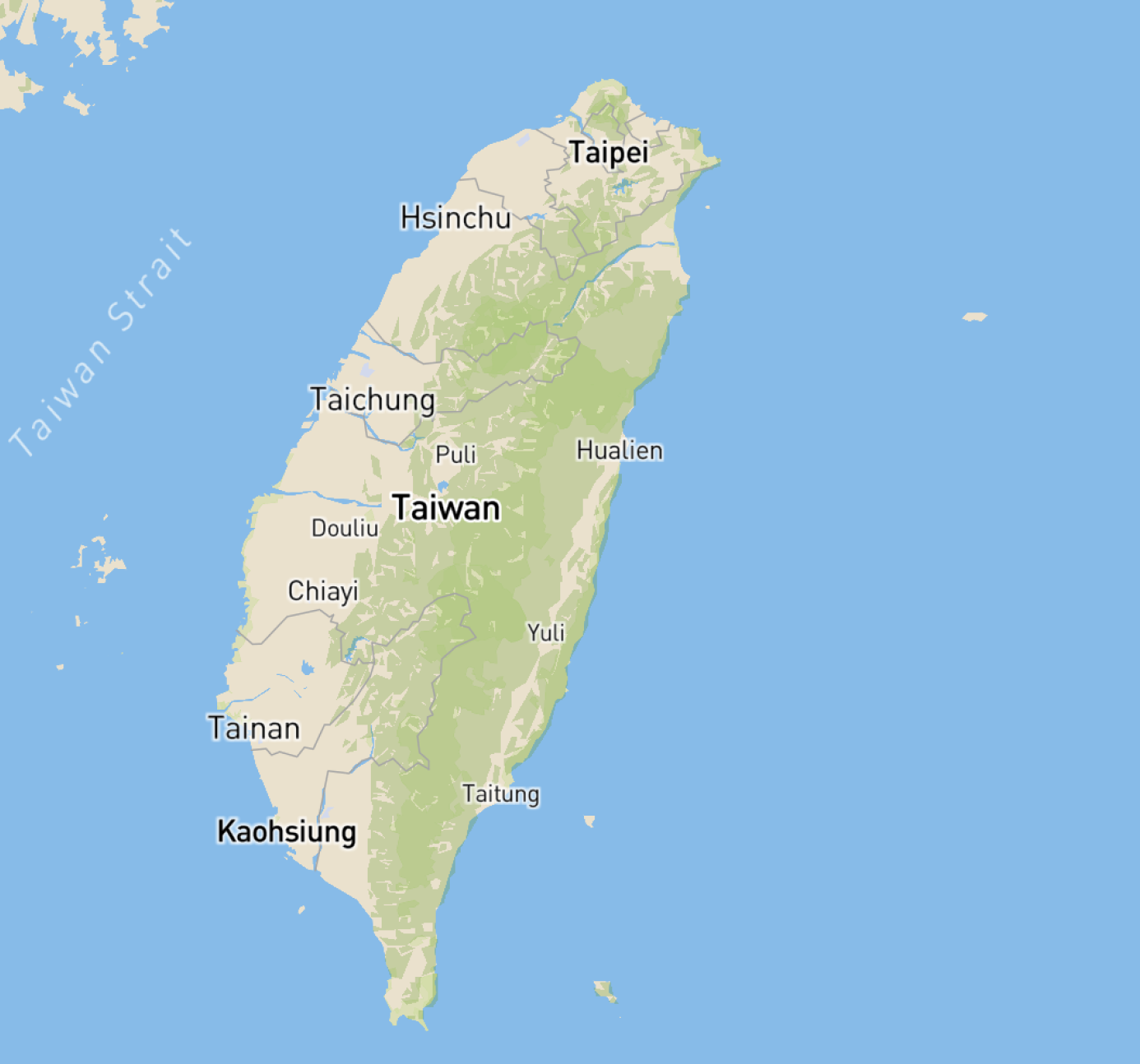
Located on the southeast of Asia, Taiwan is an island approximately 150 km away from China across the Taiwan Strait. After the economic boom in the late 20th century, the island nation is now the center of the semiconductor supply chain as well as numerous tech products, including computers and other hardwares.
The location of Taiwan sets up the strategic importance in global powers’ military projections as well as the global economy. With the Port of Kaohsiung and the Taoyuan International Airport both being one of the busiest cargo hubs in the world, the location supports numerous cargo companies in the world. In addition, situated in the first island chain, both China and the USA consider Taiwan of critical importance for projecting their influences in the East Asia region. Not to mention the complex history and political situation that would impact the world community.
Population
The population of Taiwan is approximately 23 million in a land area of 36,000 squared kilometers. With the population density around 600 per squared kilometers, Taiwan is one of the most densely populated countries in the world, trailing behind city states and Bangladesh. However, over two-thirds of the island is mountainous, resulting in the population densely populated in cities along the western plains and Taipei basin in the north.
Out of the population centers in Taiwan, the most notable is the Greater Taipei Metropolitan area, with over 7 million inhabitants. To the south is the rolling hills of Hsinchu, this area is dubbed the “Silicon Valley of Taiwan” with the highest intensity of tech companies located in this area including largest semiconductor foundry, TSMC. The southern city of Kaohsiung has the largest port in the country with a robust heavy and shipping industry. Combined with the central city of Taichung, these metropolitans make up over half of the island population.
COVID-19
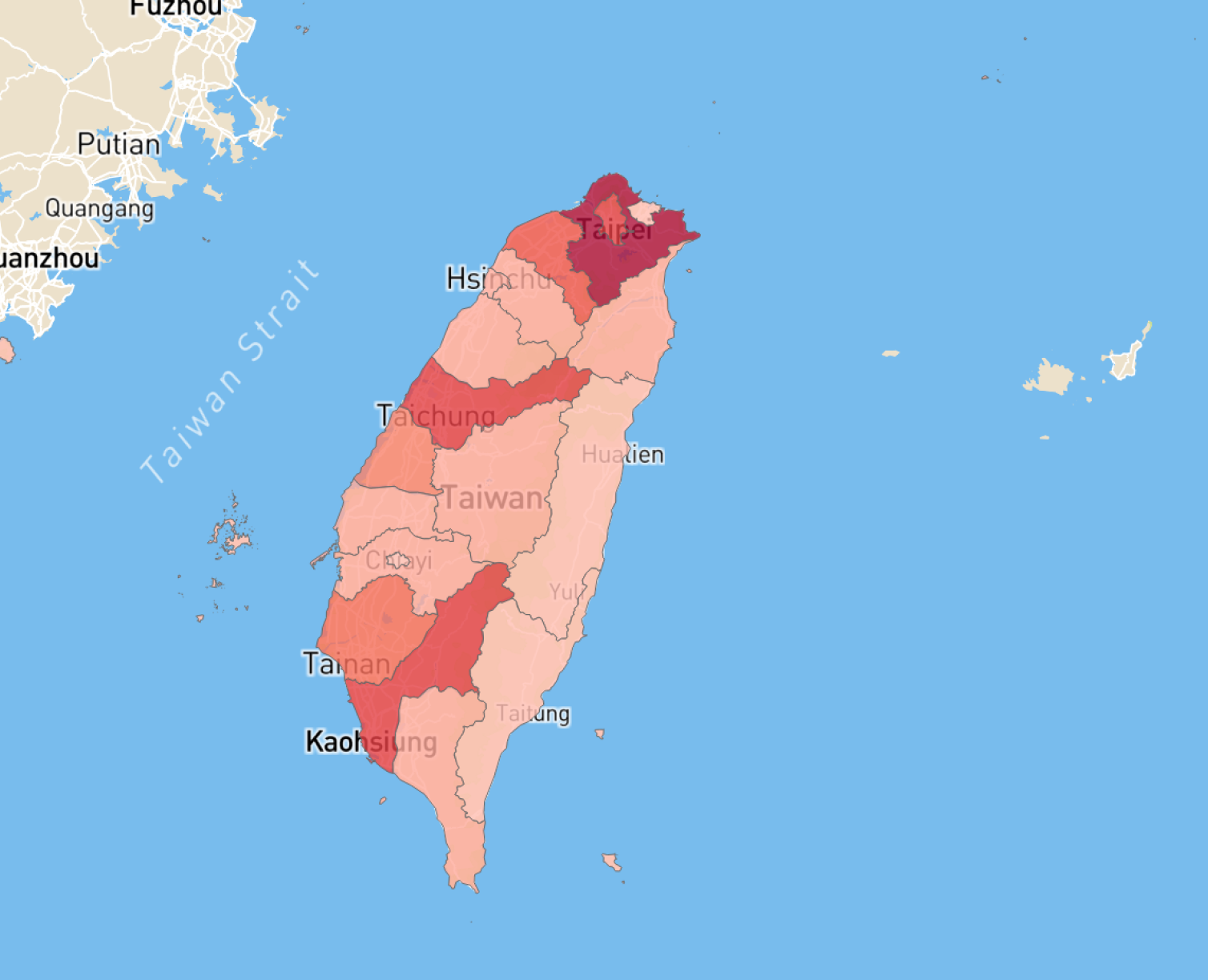
At the horizon of the global pandemic during 2020, the stricted border control and quarantine policy result in less than 1,000 cases throughout the year. This came to the end with the emerging cases during mid 2021 when relaxed quarantine measures for the airline industry and decreased awareness among the citizens resulted in a boom of infection centered in the Taipei Basin.
This forced the government to enacted a partial lockdown called the “third-level alert” throughout May and June, where measures, such as the closure of schools and businesses and restriction in means of transportation, were enforced. Most schools and companies resorted to remote option, however, there was never a mandatory order to stay-at-home.
Increased testing and proper quarantine policies were enacted after the outbreak leading to the stabilization of the local cases at the end of June. However, reduced mobility of the population were observed until later in August.
Timeline
Calm Before the Storm: Pre-Lockdown
12/31: Started screening on airplanes from China
1/20: Activation of interministry CECC
1/21: First case detected in Taiwan
2/5: Rationing of masks in Taiwan
2/6: Launch of “mask availability map”
3/11: WHO declares pandemic
9/8: Approved use of Pfizer-BioNTech Vaccine in the USA
Detection of the Delta Variant in India
3/1: Relaxation of entry guidelines for business visas and airline personnel
4/27: Numerous local cases surrounding airline staffs appear
A Storm Brewing
On 31 December 2019, rumors about an unidentified outbreak in Wuhan, China spurred the Centers for Disease Control (CDC) of Taiwan to start screening passengers from inbound flights from Wuhan.
On 20 January 2020, the international circumstances initiated the activation of the Central Epidemic Command Center (CECC) under the CDC, which is an interministry agency established after the devastating SARS (Severe Acute Respiratory Syndrome) epidemic in 2003.
On January 21, the first case was confirmed in Taiwan, who was a 50-year-old woman that taught in Wuhan, China.
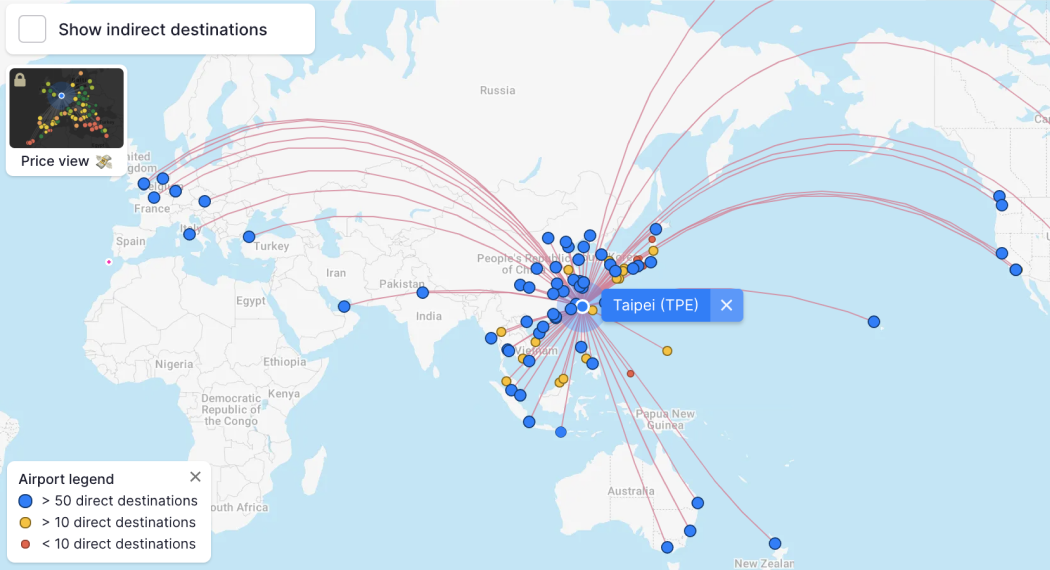
The first major challenge comes from the high connectivity between the Taiwan and China. Due to the proximity and the economic connection between Taiwan and China, Taiwan has one of the highest flight connectivity with China, creating a perfect channel for virus to spread.
To make things worst, the one of the globe’s largest migration, Lunar New Year, was around the corner. This results in the movement of many Taiwanese in China back to Taiwan, possibly bring back the virus on the way. In addition, a large movement is also observed in Taiwan domestically, increasing the risk of a nationwide epidemic. This ultimately lead to the prediction from John Hopskin University that Taiwan would be the one of the hardest hit countries by COVID-19.
Successful Quarantine?
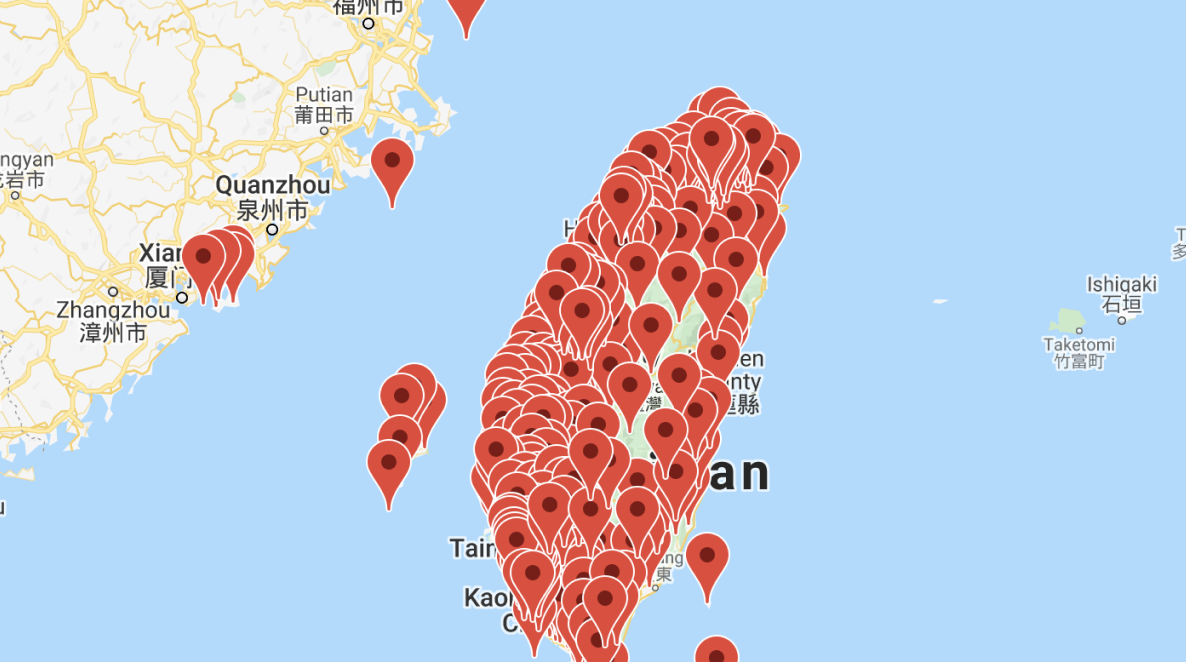
To combat this disadvantage, the CECC started to implement 14-day quarantine procedure for arrivals from China, which later became for any individual arriving outside the island, including citizens.
People can decide if they want to live in a government accomodation, a quarantine hotel, or home isolation. To ensure an effective quarantine, people are requried to provide their phone number to the local authorities. This phone device was electronic monitoring device that was tracked using the signals of their mobile phone to determine whether they leave the range of their home. The data was then deleted from the government database by law after the quarantine period. Although legally legitimate, some citizens expressed concerns on the similicity of obtaining the geolocation of each individual only via their mobile phones.
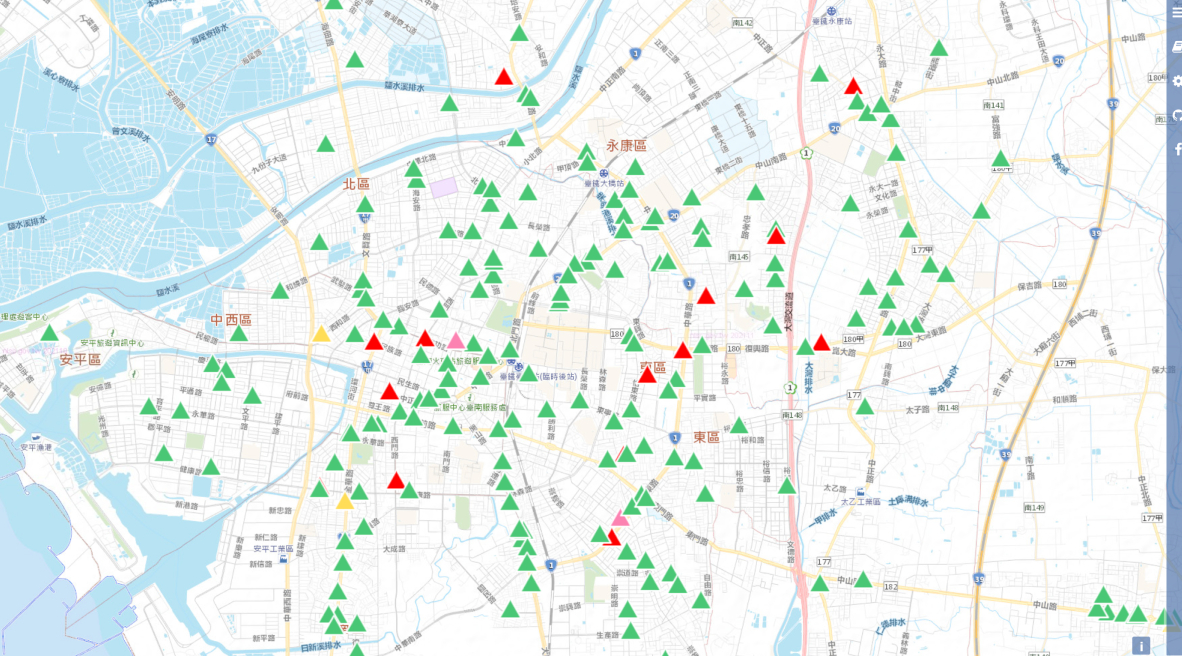
In addition, the shortage of masks resulted in the rationing of mask in the beginning of the pandemic. This promopted citizens to create a “mask availability map” to help citiznes cope with the insufficient map availability throughout the country. To solve thethe government worked along with local mask suppliers to increase the mask supply in light of the initial shortage.
To solve the government worked along with local mask suppliers to increase the mask supply in light of the initial shortage. For the rest of 2020, the mask distribution gradually stabilized and enable “mask diplomacy” for Taiwan by donating masks to hardest hit regions around the world.
Optimal Condition
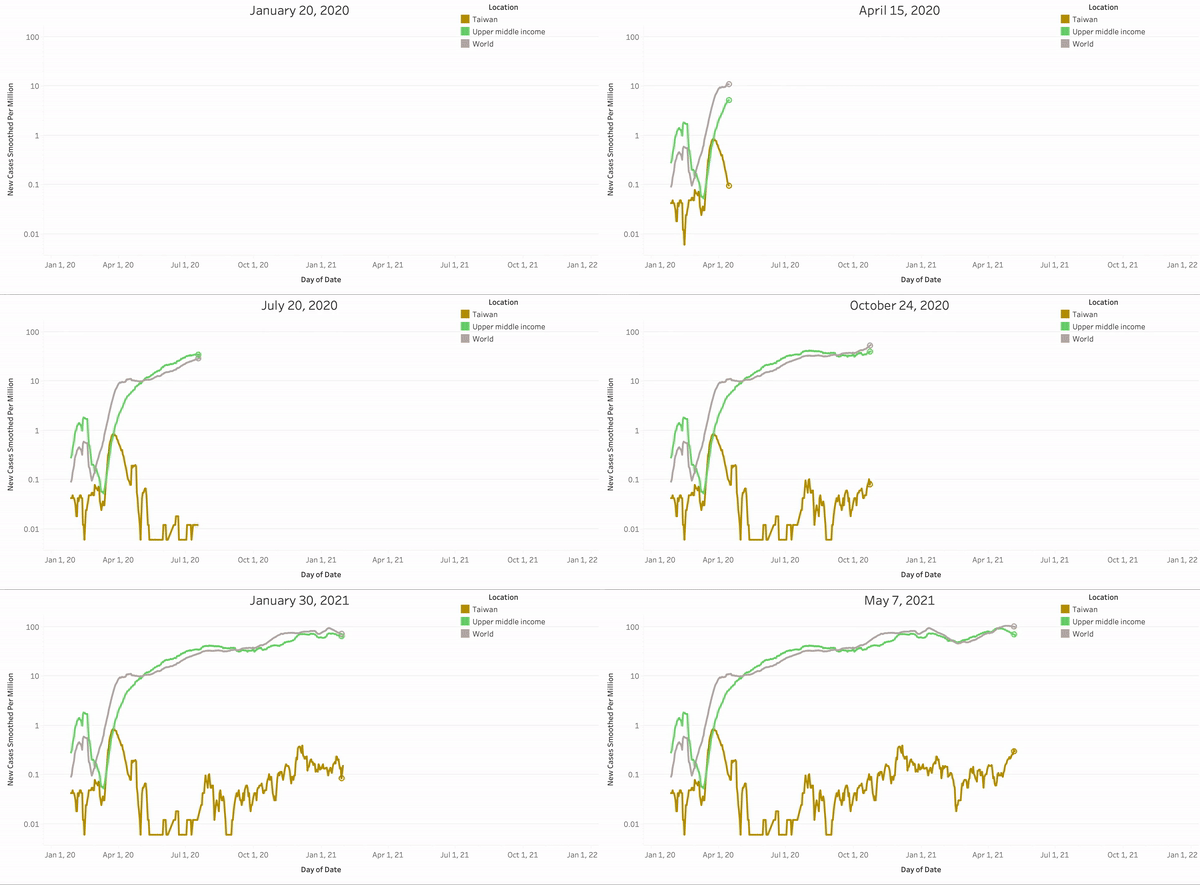
Throughout the rest of 2020 to the start of 2021, Taiwan experienced no major outbreak, with only minor clusters that were quickly traced and quarantined. This prompts relaxation in the quarantine measures for airline workers by the CECC, reducing the time in self-isolation from 7 days to 3 days. Furthermore, due to the long pause of major outbreak, local citizens started to relax in COVID-19 prevention measures, including face masks and social distancing.
For the rest of the world, this is also the time where the delta variant emerged from India as well as the first vaccine was developed.
Fast and Furious: Lockdown
5/12: Warning level raised to level 2 after a cluster of unknown origin cases emerge
5/15: Warning level around Taipei City is raised to level 3 initiating lockdown in the region
5/19: Warning level is raised to level 3 all over Taiwan initiating a nation-wide lockdown
5/22: Retroactive cases were identified due to backlog in testing
6/6: Official case counts reaches 10,000 cases
6/17: Official death count reaches 500 deaths
7/13: Relaxation of lockdown measures but still maintaining the same warning level
7/27: Warning level was relaxed to level 2 for Taiwan ending most lockdown measures
8/25: No cases was reported for the first time since the lockdown measures
9/15: Delta Variant appears in local cases in Taipei
Starting point
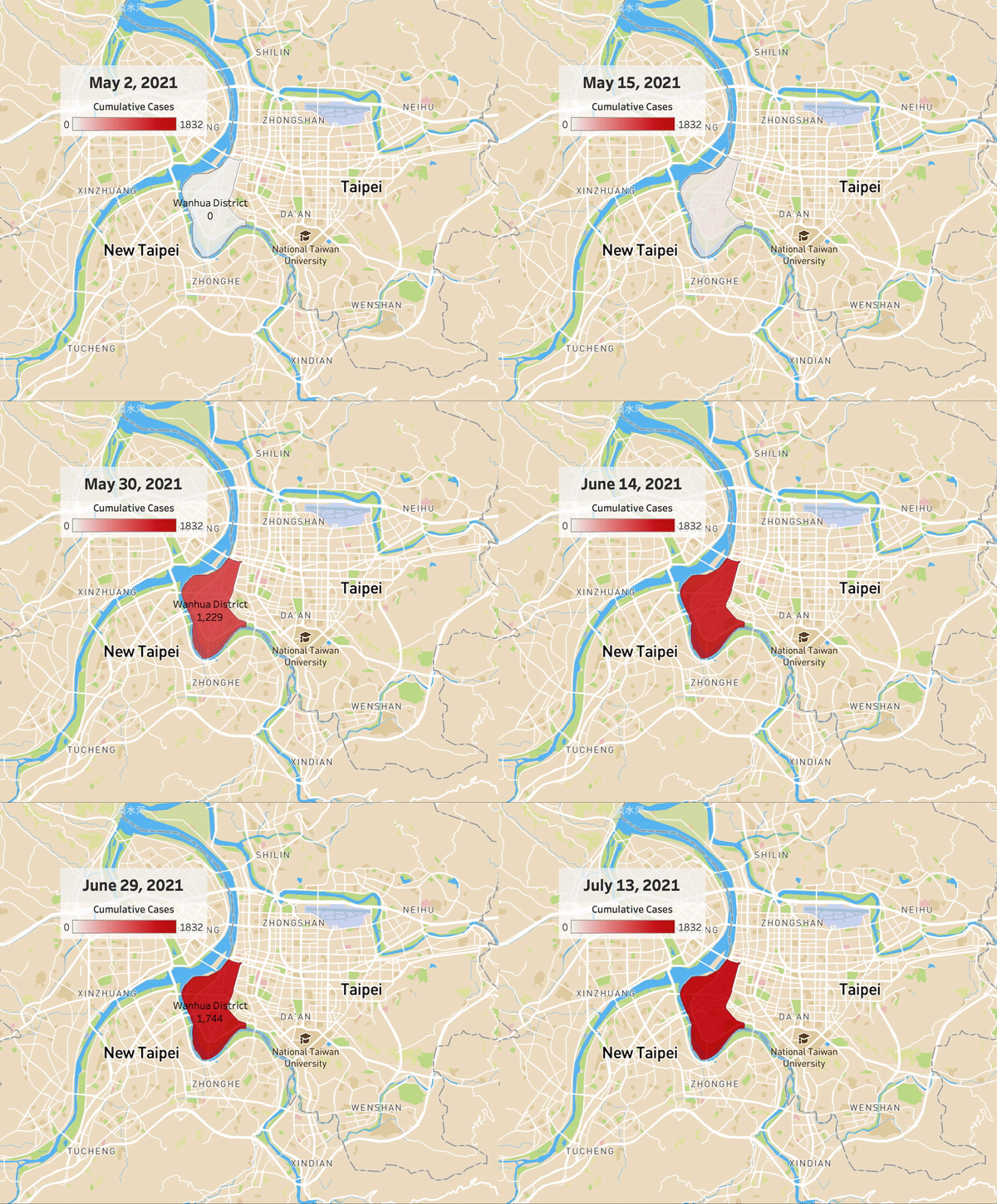
The identification of a cluster of cases in the Wanhua area in Taipei initiated the outbreak. No one knows exactly how the virus infiltrated the series of quarantine measures from the borders all the way to Central Taipei. However, there are multiple hypotheses regarding the loose quarantine protocols for airline crews and religious gatherings.
(May 2, 2021 - Jul 13, 2021)
The virus came quietly when everyone was celebrating the arrival of summer. After one year of successful quarantine of the virus, no one knew that the darkest months had not arrived yet. Worst yet, this cluster in Wanhua was not the only cluster identified during the timeframe of May 10 to May 20. It was sporadic, a classic example of the start of an epidemic in the textbook.
This prompt the central government to heighten the Epidemic Warning Level to level 2 on May 12 around Taiwan, which means that large events are canceled and enhanced mask-wearing is needed for the general population. However, no lockdown was initiated and indoor dining in restaurants were still allowed. This moderate response from the government was mainly due to the lack of clarity of the scale of the outbreak. Even with no immediate connections found found with previous cases, it was still possible that the cases were only small clusters that the island has dealt with multiple times before.
However, this time the situation was different. More and more cases that have nothing in common comes popping up all over Northern Taiwan and gradually spreading southward. The big outbreak has finally arrived in Taiwan after one year of containment.
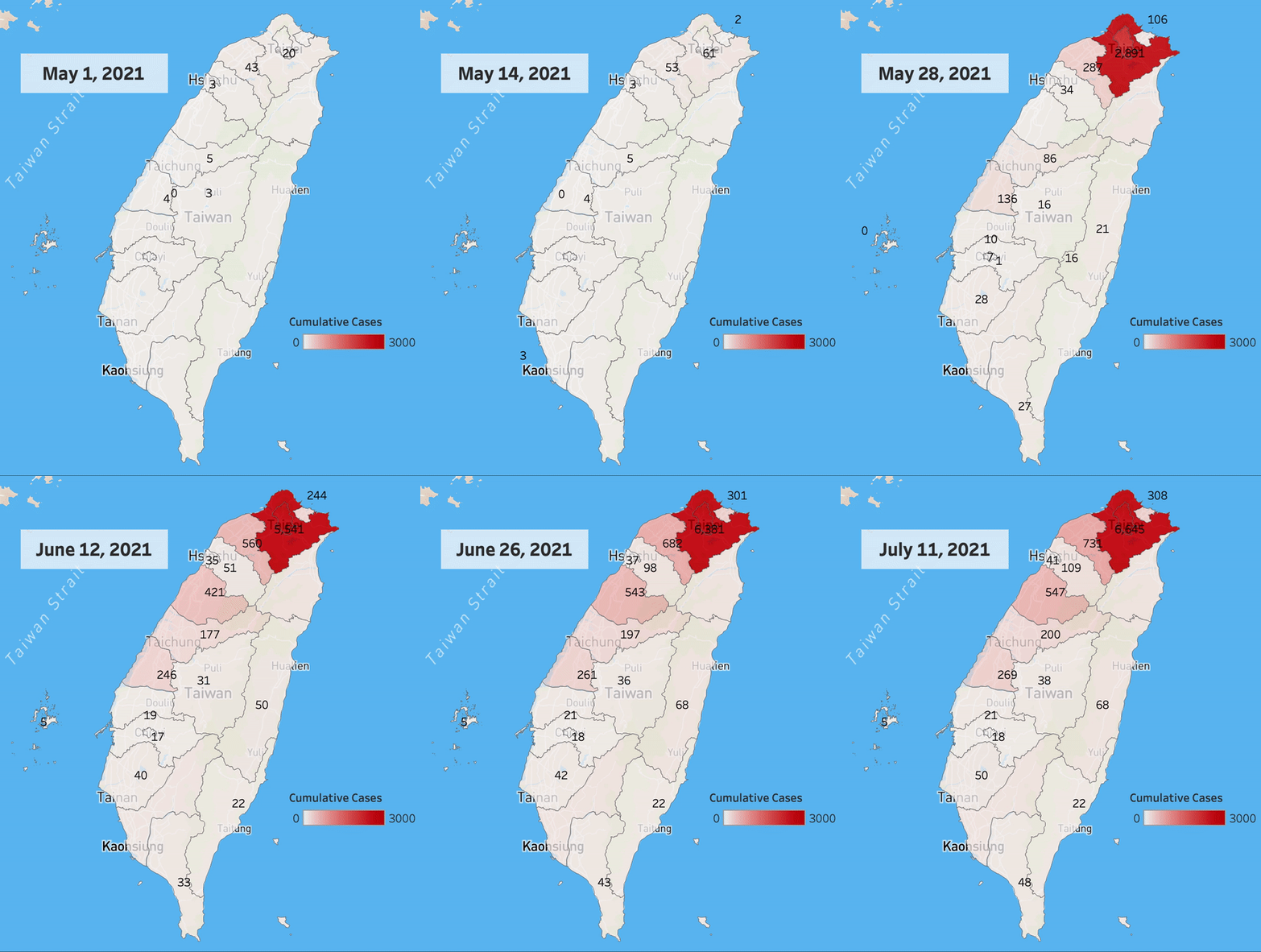
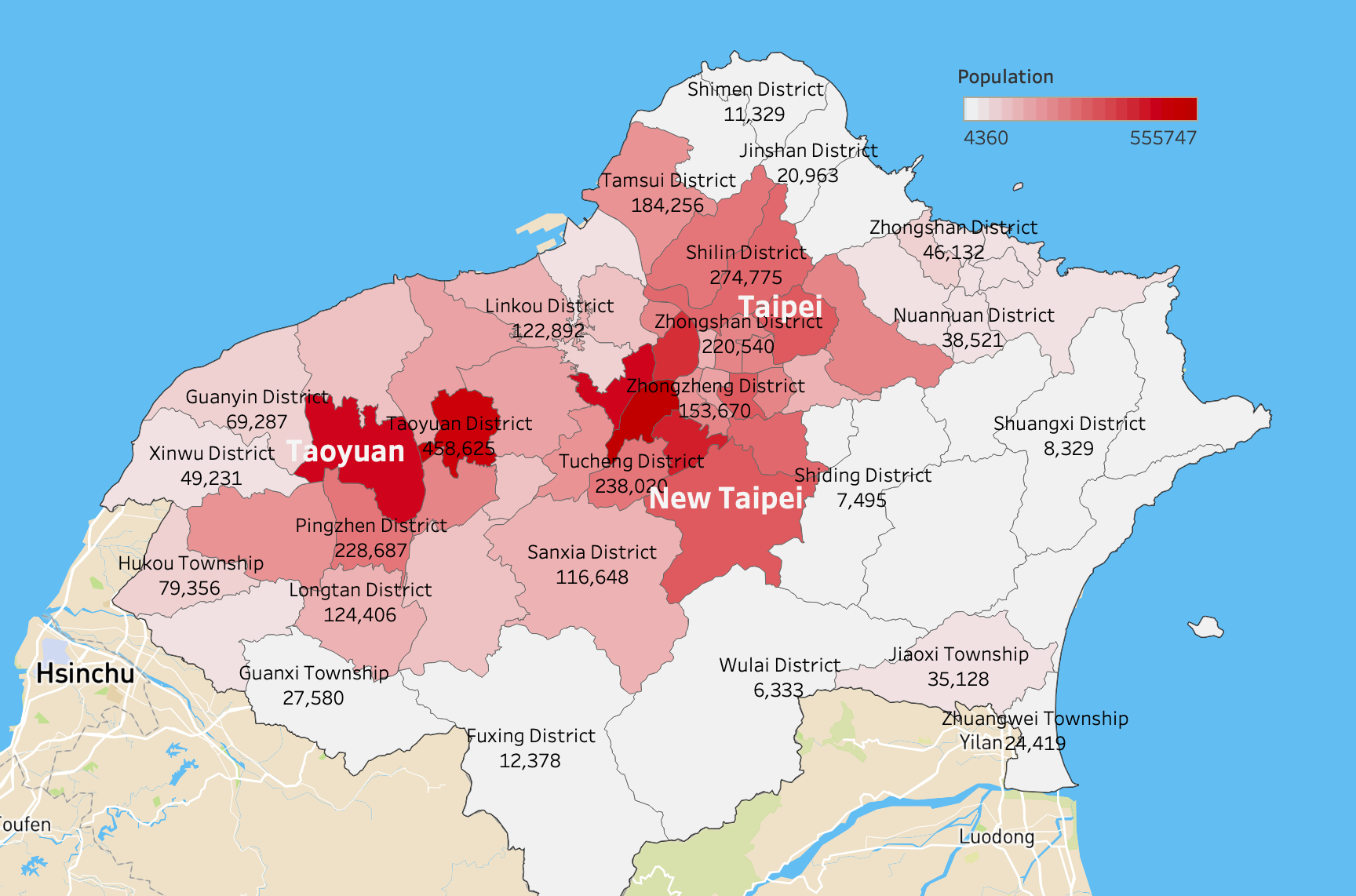
Looking back at the situation, due to the high population density in Taipei, the virus had rapidly spread around the area without anyone's watch -- especially in the population centers of Taipei and New Taipei City. It was unfortunate but statistically expected that the worse-hit neighborhoods are also the most populous districts of Taipei and New Taipei centered around Zhongzheng District.
Lockdown in effect
As more and more testing sites were opened in the Greater Taipei area, cases skyrocketed in and around Taipei, and soon enough, all of Greater Taipei have reported increasing local cases. However, at this point of time, the cases in Southern Taiwan were not as prominent as the situation north. Therefore, on May 15, the CECC had to raise Epidemic Warning Level to level 3 for the Greater Taipei area (Taipei City and New Taipei City), leaving the rest of the island at level 2.
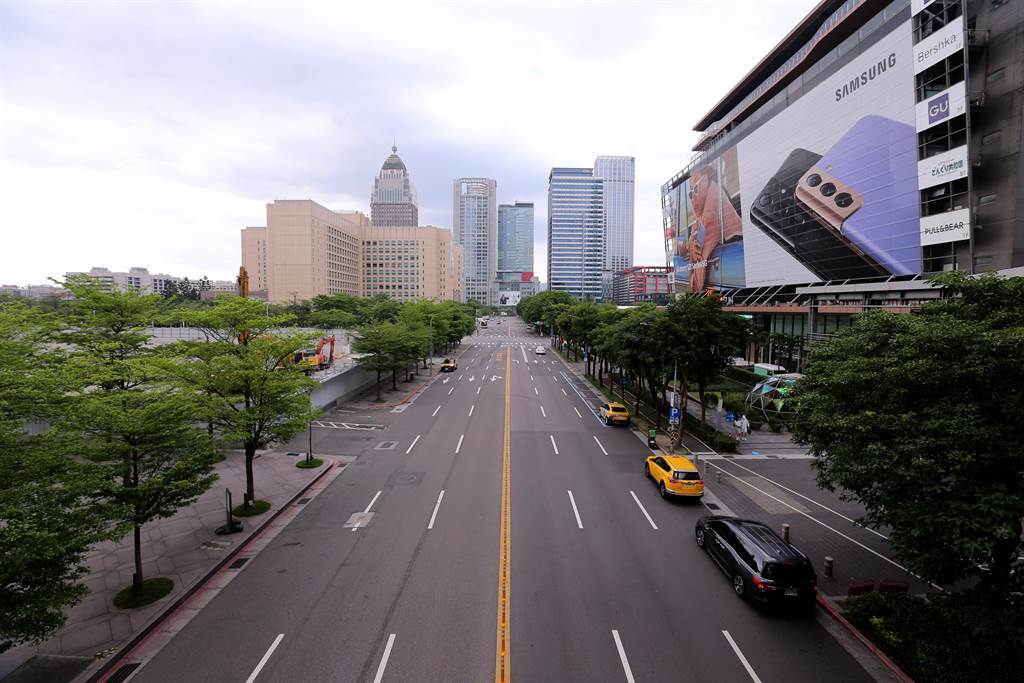
An Epidemic Warning Level 3 indicates a partial lockdown with gatherings limited to 5 people or a household and all non-essential businesses closed. And when the first weekend came around on May 17th, jaw-dropping scenes that happened all around the world finally come to pass in Taipei. Empty streets, empty malls, empty everything -- the city of Taipei is on hold.
Finally, on May 19, all of Taiwan enters an Epidemic Warning Level 3 alert, fully locking the country down. This is also when cases exponentially increased with the new cases per million people closing in to the global average.
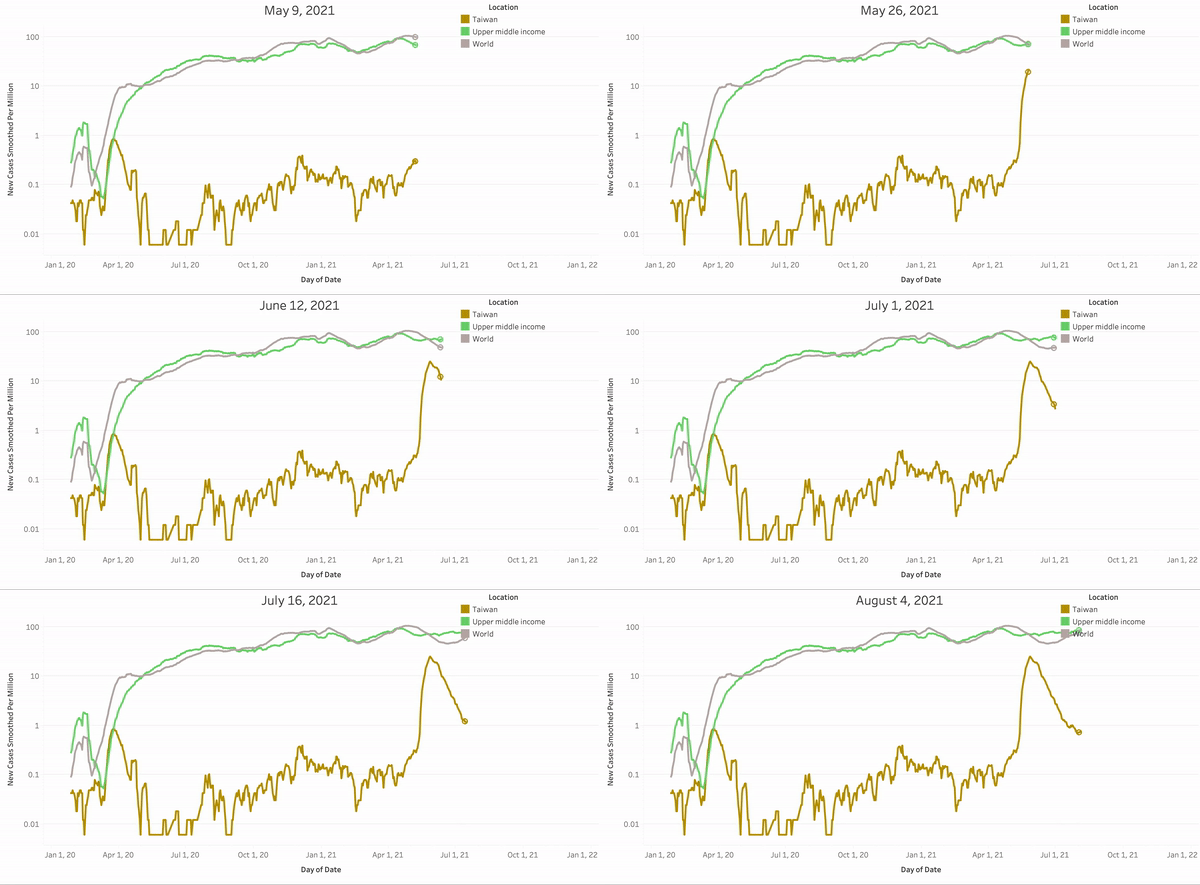
On June 6, Taiwan has officially reached 10,000 cases and on June 17, five hundred deaths were reported. Extensive lockdown measures persists as level 3 warning was in effect for two months. However, the trend of cases gradually dip downwards as the effect of lockdown came about after peaking on the last week of May.
After almost two months of lockdown, guidelines for activities were relaxed on July 13 when cases has dropped down significantly to double digits per day. Furthermore, vaccine distribution has been steadily increased through out June, July and August with the elderly prioritized higher than other age groups. This combined effect of lockdown and vaccines ultimately lead to the end of the Level 3 warning on July 27 2021. And on August 25, zero cases were again reported in Taiwan.
Nevertheless, this is not the end of the pandemic in Taiwan. As the global dominant variant becomes delta, the variant finally enters Taiwan locally on September 15, leaving greater uncertainty in the post-COVID atmosphere.
Post-lockdown
After the lifting of the lockdown and the acceleration of vaccine distribution, there was no major outbreaks in Taiwan that requires a second lockdown. That said, the emergent of omicron and delta variants has led to a persistent inflow of cases from abroad. Under the "zero-case" policy, quarantine measures and mask wearing still accompany the life of every Taiwanese citizens.
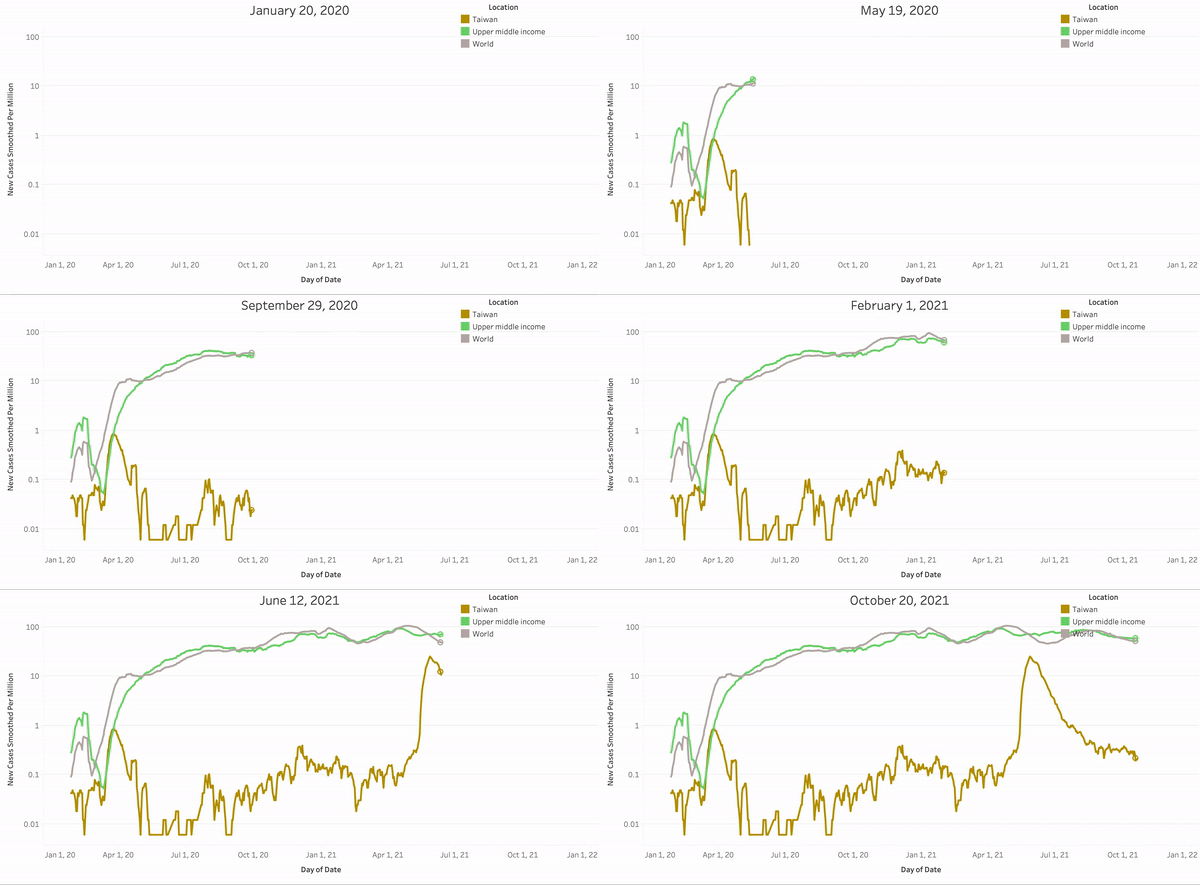
With the introduction of booster shots and the low hospitalization rate of the prevalent omicron variant, living with COVID-19 seems to be inevitable even in Taiwan. But after living in COVID-free for most of the pandemic, how would the public respond? This is a remaining question that is left unanswered.
Mobility Change
Mobility Change during this time remains similar to the level of pre-COVID-19 pandemic. This is illustrated in Apple and Google's mobility index as well as data inferred from seismic noise.
Mobility Index
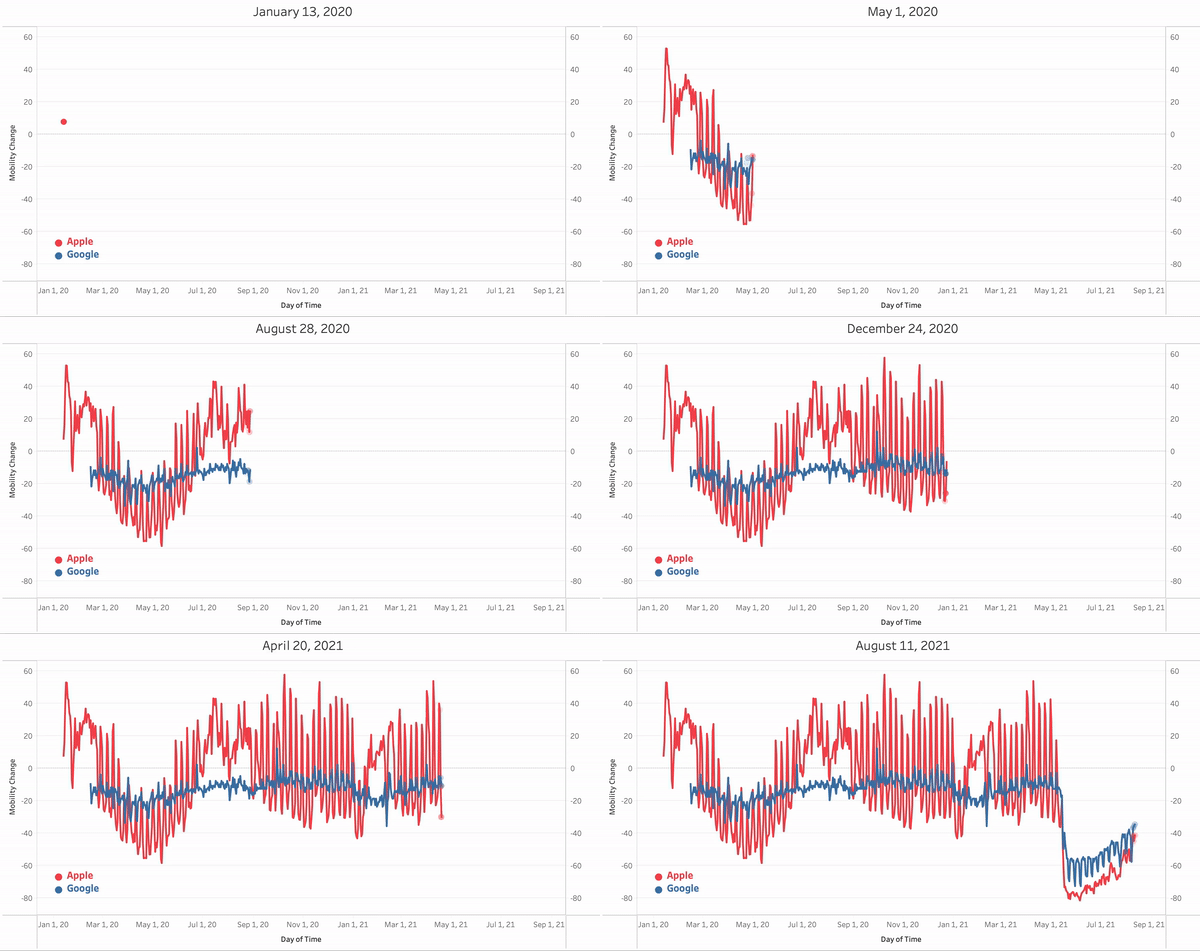
From the Apple an Google data, we see a clear drop of percentage at around mid-May compared to the baseline, which is the average mobility in Jan, 2020. There are two other characteristics observed in this mobility trend visualization.
- The first is the decrease in Apple's mobility index during the first half year of 2020. This can be attributed to the heighten alert in Taiwan at the start of the COVID-19 pandemic, but it quickly rebounded after summer.
- The second is the slight drop at the end of January of 2021. This is likely due to the celebration of Lunar New Year in Taiwan. With most industries adjourned for the holidays, holiday seasons usually lead to a sharp drop in mobility level as most citizens stays in home with family and reduce the amount of movement for work.
Seismic Noise
Using the seismic noise data, we see similar trends with the mobility indexes, strengthening the idea that a large mobility drop was observed during the lockdown period.
From the map visualization on the right, this shows the seismic noise values compared to the baseline, which is the average seismic noise throughout Dec 2019. This visualization gives the general sense of seismic noise change from Dec 2019 to Aug 2021. Similar to what we observed in mobility indexes, we find drop of seismic noises all over Taiwan during specific time frames.
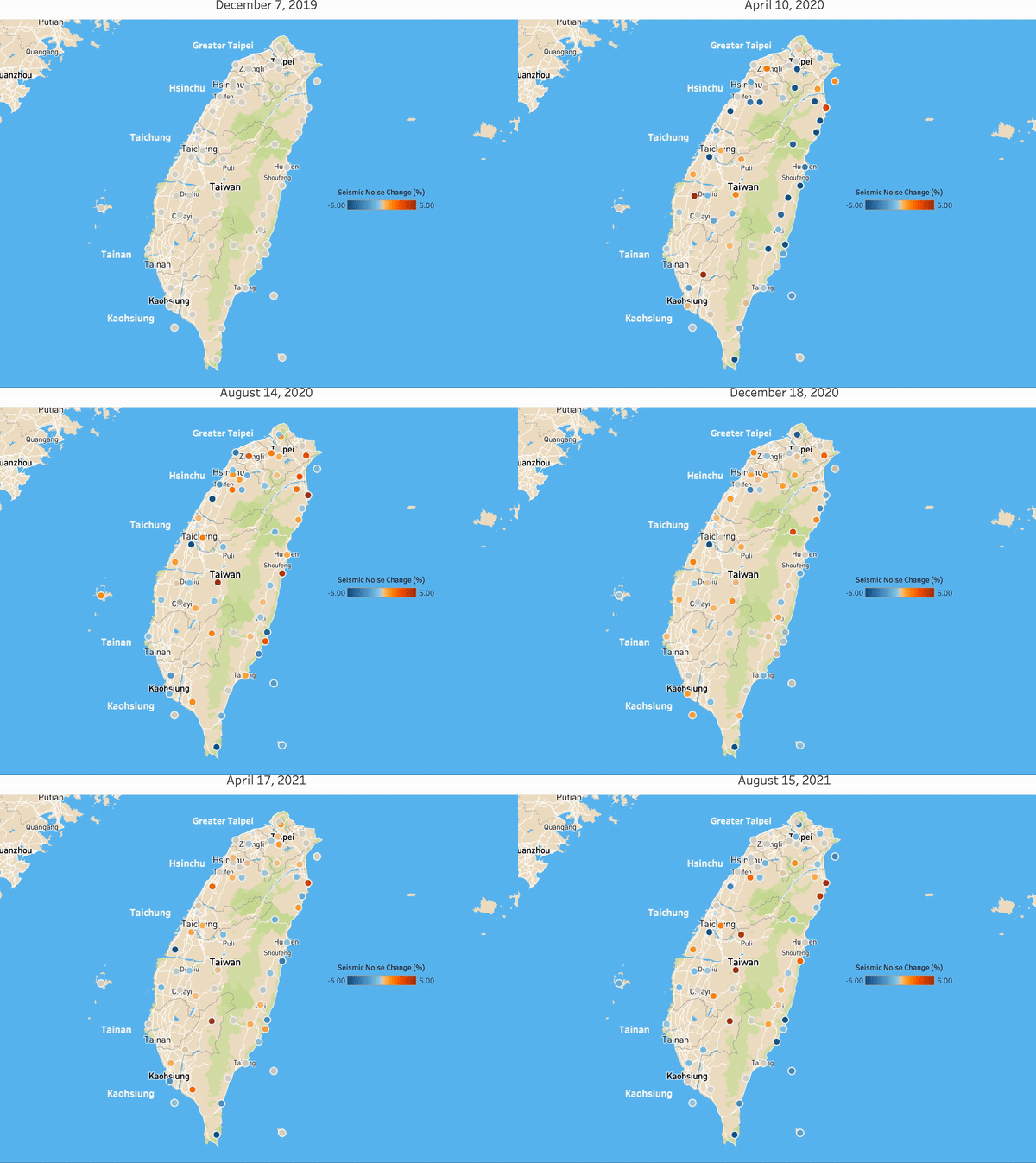
The drop of seismic noises from Feb to Jun 2020 showed the initial reaction of the pandemic for the public in Taiwan. Similar to the mobility index, no large drop was found in major metropolitan areas, including Taipei, Taichung and Kaohsiung.
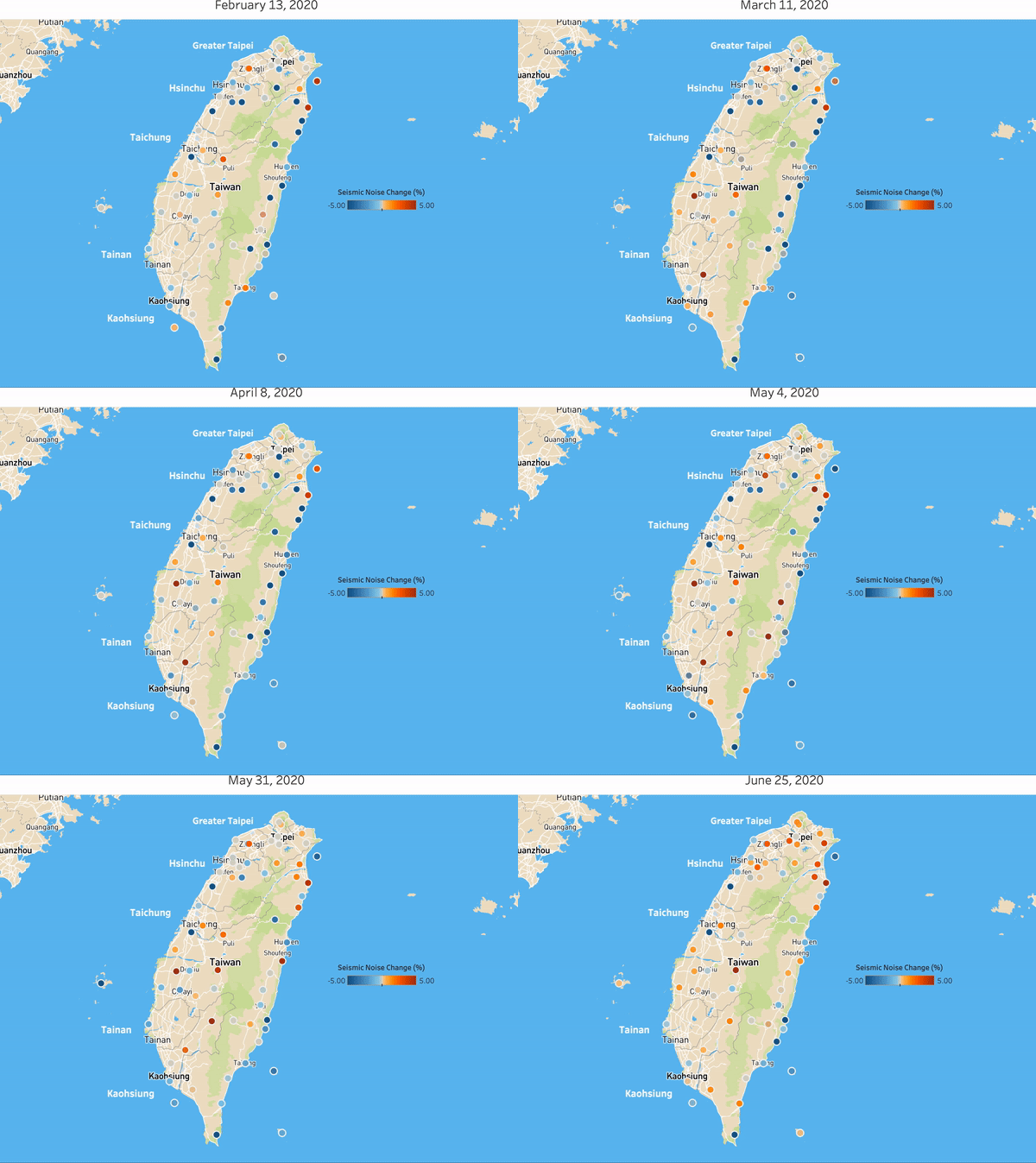
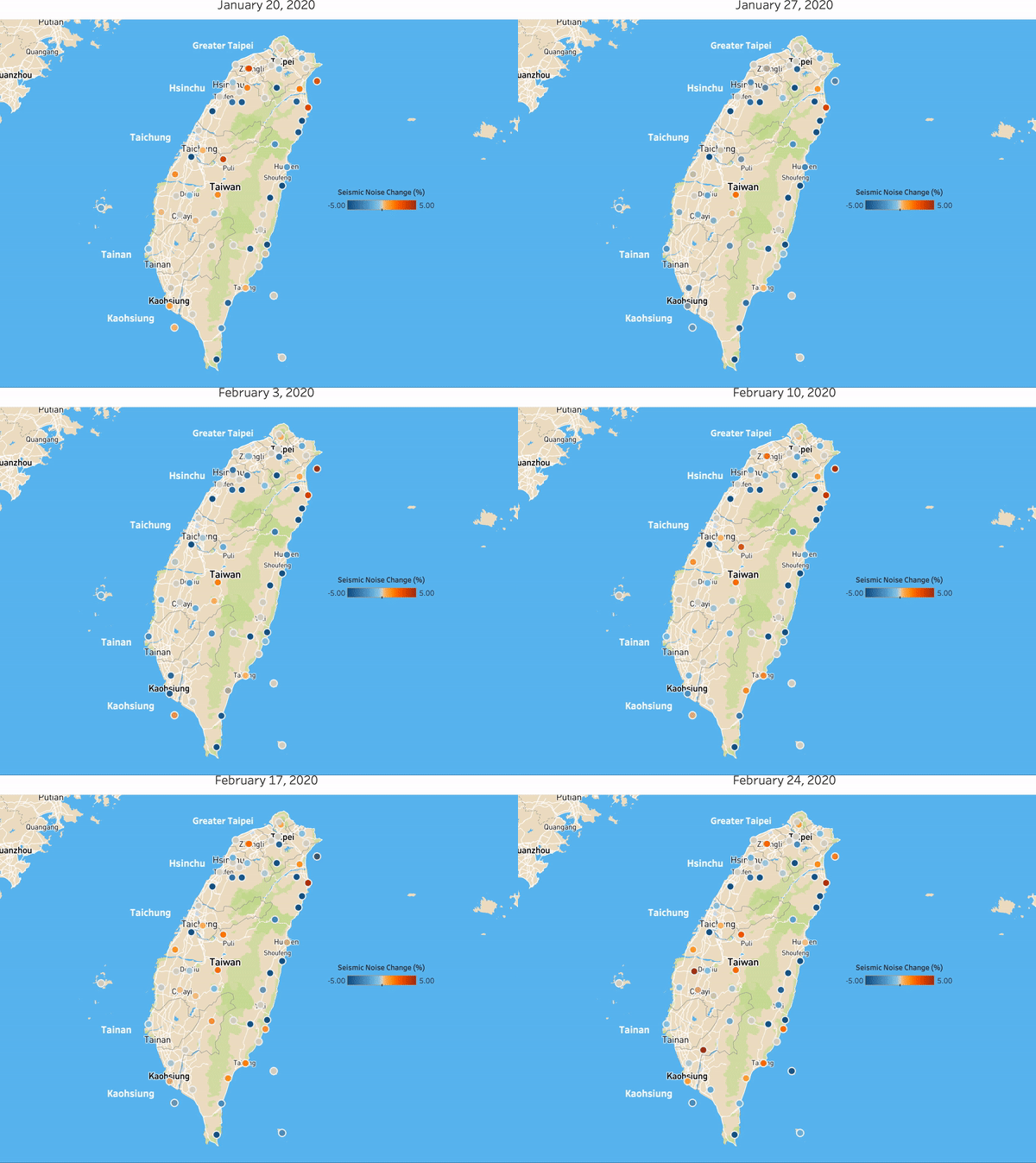
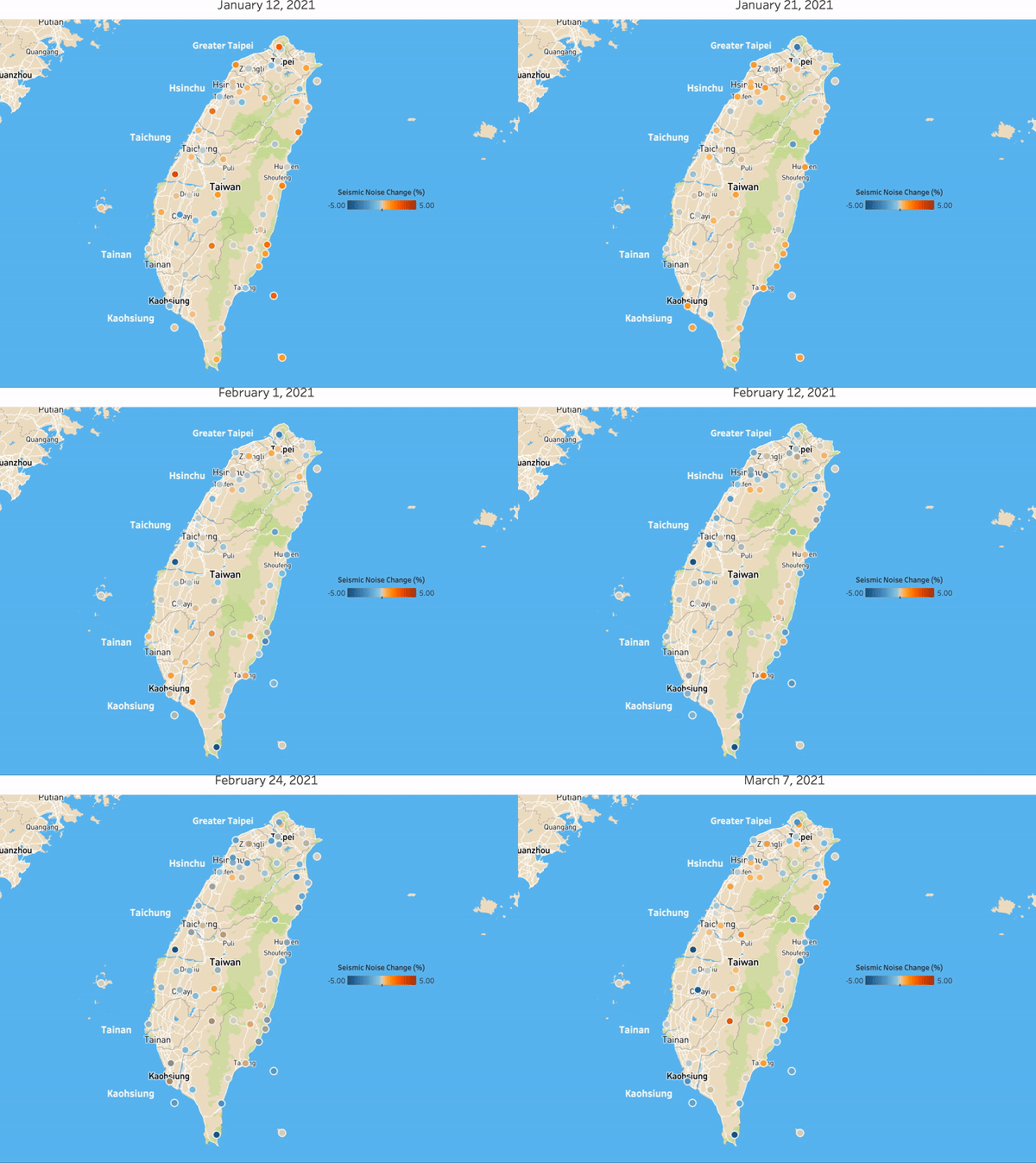
Both Lunar New Year celebrations after the pandemic show a large drop and a quick rebound in seismic noise after the holiday. Since seismic noise measures the rumbling from human activities, this decrease is more significant than that of the mobility indexes. Specifically, the reduction of traffic from morning and evening commutes as well as the decrease of heavy trucks attribute to the large significance of holiday drops of seismic noises.
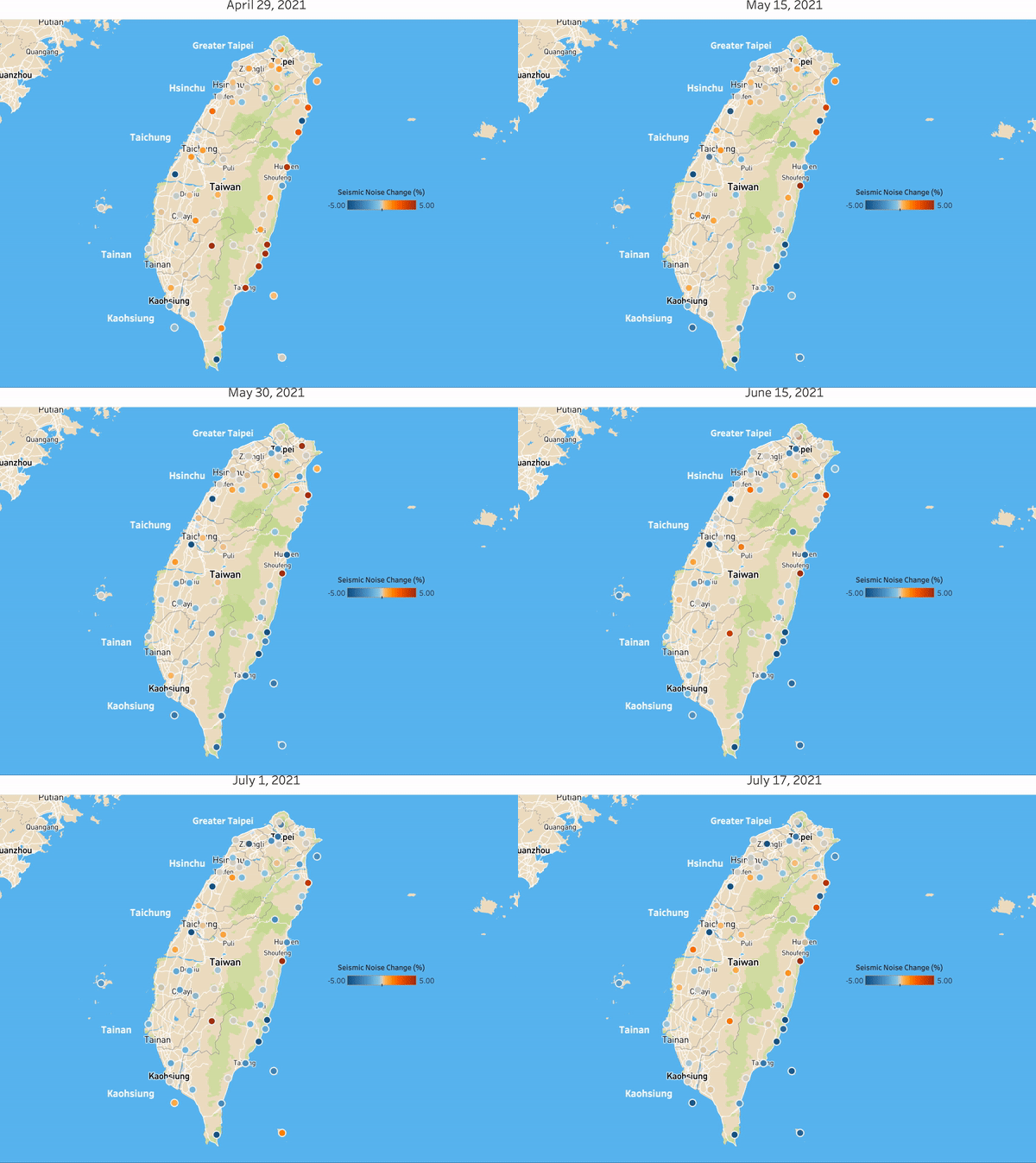
Lastly, we see the reduction of seismic noise during the lockdown period from May to Jul 2021. Interestingly, the reduction of seismic noise is not as significant as the mobility indexes. However, if we look in at the Greater Taipei area, a rather significant decrease was found in the three city center stations. A hypothesis to this is centered around the different types of mobility reduction. In the mobility indexes, the mass transit was the main source of data compared to traffic as the main source of data for seismic noise observations. Since the lockdown in Taiwan was never a strict lockdown (that would be Epidemic Warning Level 4), the tech and heavy industries were less impacted by the lockdown, leaving a steady flow of heavy vehicle traffic throughout the period. Furthermore, commuting traffic did not decrease significantly as service companies were not forced to close. The combination of these variables would leave traffic reduced but not as significant compared to holiday seasons in large cities.
Nonetheless, compared to the previous year, the reduction of seismic noise throughout the summer is still visible, as we look at large cities' individual seismic noise time series below. This ultimately proves the impact of lockdowns as well as high association between mobility changes and seismic noise.
Seismic noise changes in large cities
Explore on Your Own
The following visualization is an interactive map with seismic noise data along with a timeline, feel free to play with the visualization to explore more nuance patterns in the data.